When Efficiency Becomes Exposure: The Hidden Risk Architecture Inside Enterprise Automation

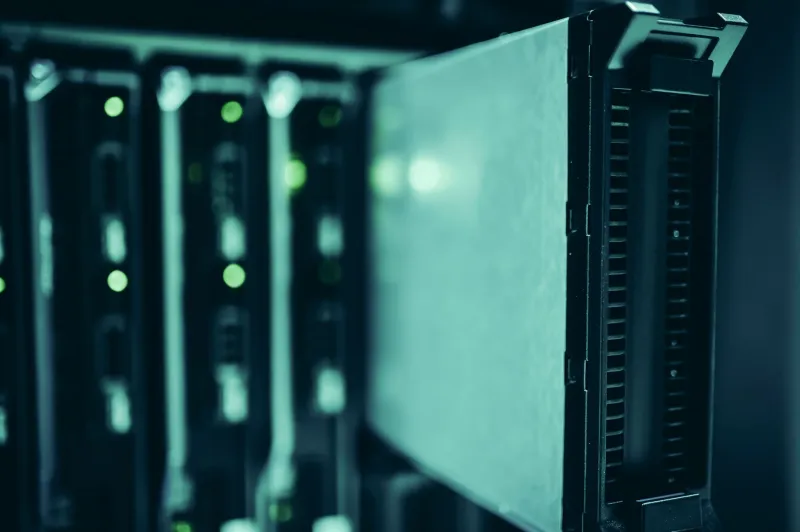
Photo: Dspmedia, Public domain, via Wikimedia Commons
There is a certain institutional optimism that accompanies every major automation initiative. The pitch is familiar: eliminate manual bottlenecks, reduce labor overhead, accelerate delivery cycles, and free your most skilled people for higher-value work. For many enterprises, that pitch has delivered measurable returns. Workflows that once required hours of human coordination now complete in minutes. Deployment pipelines that once demanded careful manual oversight now execute with near-zero human intervention.
But something else has been accumulating quietly alongside those efficiency gains — a layered, often invisible risk architecture that most organizations have not yet mapped, let alone addressed.
Automation does not eliminate risk. In many enterprise environments, it redistributes and concentrates it in ways that are genuinely harder to detect and significantly more consequential when they surface.
The Privilege Creep Problem Nobody Is Tracking
Robotic process automation tools, workflow orchestration platforms, and CI/CD pipeline agents all share a common characteristic: they require permissions to function. In the early stages of an automation initiative, those permissions are typically scoped carefully. But as automation footprints expand — as new workflows are layered on top of existing ones, as integrations multiply, and as teams move fast to meet delivery timelines — permission scopes tend to drift upward.
This phenomenon, commonly called privilege creep, is well understood in the context of human user accounts. It is far less consistently managed when the accounts in question belong to automated processes.
A service account provisioned for a limited RPA workflow in one business unit may, over twelve to eighteen months, accumulate access rights across three additional systems, two cloud environments, and a production database — not because anyone made a deliberate decision to expand that access, but because each individual integration request seemed reasonable in isolation. No single approver had visibility into the cumulative picture.
The result is a class of non-human identities carrying enterprise-wide access that would trigger immediate alarm if discovered on a human account. And unlike human accounts, these service accounts rarely appear in standard identity governance reviews.
Configuration Drift and the Automation Blind Spot
Automation tools are, by design, consistent. They execute the same logic in the same way, repeatedly, at scale. This consistency is precisely what makes them valuable — and precisely what makes configuration drift so dangerous when it occurs.
In a manually managed environment, configuration changes are typically visible. A human administrator makes a change, that change may be logged, and the deviation from baseline is at least theoretically detectable. In heavily automated environments, configuration drift can occur through the automation itself. A workflow that writes configuration values, a pipeline that modifies environment variables, or an orchestration agent that adjusts resource allocations based on conditional logic can all introduce drift that looks, to conventional monitoring tools, like normal automated activity.
The practical consequence is that enterprises often have less real-time visibility into the actual state of their automated infrastructure than they do into their manually managed systems. Automation tools create activity — often voluminous activity — that can obscure meaningful signals within a flood of routine operational noise.
Cascading Failures at Machine Speed
One of the most underappreciated risks in enterprise automation architecture is the failure propagation problem. Human-mediated processes have natural interruption points. When something goes wrong in a manual workflow, a person notices, pauses, and escalates. That human checkpoint, often dismissed as inefficiency, functions as a circuit breaker.
Automated pipelines typically lack equivalent circuit breakers unless they are explicitly designed in. When a misconfiguration, a corrupted data input, or a downstream system failure occurs within an automated workflow, the automation continues executing — often propagating the error across every downstream system and process it touches before anyone receives an alert.
In environments where automation handles financial transactions, customer data processing, or infrastructure provisioning, the blast radius of an undetected failure can be substantial. By the time a human operator identifies the problem, the automated system may have written bad data to dozens of records, provisioned resources incorrectly across multiple cloud regions, or triggered downstream workflows that are themselves difficult to reverse.
Speed, which is the core value proposition of automation, becomes a liability the moment something goes wrong and no one is watching.
Building "Secure by Design" Automation: A Practical Framework
None of this argues against automation. The operational and competitive case for automating enterprise workflows remains compelling. The argument is for a more disciplined approach to how automation is designed, deployed, and governed — one that treats security and oversight as foundational requirements rather than features to be added after the efficiency gains have been captured.
Establish a non-human identity governance program. Service accounts, automation agents, and pipeline credentials should be subject to the same lifecycle management, access reviews, and least-privilege enforcement applied to human accounts. This requires tooling that can inventory non-human identities across cloud and on-premises environments and surface their effective permission scopes.
Instrument automation pipelines for anomaly detection. Automated workflows should generate structured logs that feed into your security information and event management platform. The goal is not to log everything indiscriminately, but to capture the signals that indicate deviation from expected behavior — unusual permission usage, unexpected data volumes, out-of-pattern execution timing.
Design explicit failure boundaries. Every automated workflow should have defined conditions under which it stops executing and escalates to human review. These boundaries should be treated as architectural requirements, not optional enhancements. The relevant question during design is not just "what does this workflow do when it succeeds" but "what does it do when it encounters an unexpected state."
Conduct automation-specific threat modeling. Standard threat modeling exercises focus on application and infrastructure attack surfaces. Enterprises with significant automation footprints should extend this practice to their automation architecture — mapping the ways in which compromised credentials, misconfigured agents, or manipulated inputs could propagate through automated workflows.
Implement configuration drift detection for automated environments. Baseline the expected configuration state of your automation infrastructure and monitor continuously for deviations. This requires tooling capable of distinguishing between configuration changes made by authorized automation logic and changes that represent unintended drift.
The Governance Gap That Keeps Growing
The fundamental challenge many enterprises face is organizational rather than technical. Automation initiatives are frequently owned by operational or engineering teams whose primary mandate is delivery speed. Security and governance functions are often engaged late in the process, if at all, and may lack the technical context to evaluate automation-specific risks effectively.
Closing this gap requires deliberate structural change. Security architects should have defined roles in automation design reviews. Governance frameworks should explicitly address non-human identity management. And executive leadership should understand that the risk exposure embedded in an enterprise automation portfolio is a material consideration — one that belongs in the same conversation as the efficiency gains that justified the investment.
The enterprises that will navigate this challenge most successfully are those that stop treating automation security as a remediation problem and start treating it as a design discipline. The technology to build secure automation exists. The frameworks to govern it are well understood. What is often missing is the organizational commitment to apply them before the efficiency gains have already been banked and the vulnerabilities have already been embedded.
Automation is not inherently dangerous. Automation that is deployed without adequate security architecture, monitored without adequate visibility, and governed without adequate oversight most certainly is.