The Integration Debt Crisis: Why Your System Connections Are Compounding Into a Financial Liability
The concept of technical debt has achieved genuine currency in enterprise IT conversations. Boards understand it. CFOs have learned to budget for it. CIOs have developed remediation roadmaps around it. The idea that deferred maintenance and expedient engineering decisions accumulate into future costs is now broadly accepted as a structural reality of large-scale technology environments.
What has received far less attention — and far less remediation investment — is the parallel liability that has been accumulating in the connective tissue between enterprise systems. Call it integration debt: the compounding cost of poorly designed, inadequately documented, and operationally fragile system connections that now underpin critical business processes across virtually every major enterprise in the United States.
If technical debt is the crack in the foundation, integration debt is the compromised load-bearing wall. It is less visible, harder to quantify, and, in many organizations, significantly more expensive to address.
What Integration Debt Actually Looks Like
Integration debt does not announce itself. It accumulates through a series of individually pragmatic decisions that, in aggregate, produce an infrastructure environment characterized by brittleness, opacity, and escalating maintenance costs.
The most common manifestation is the point-to-point integration: a direct connection built between two specific systems to solve a specific problem at a specific point in time. When the first such connection is built, it is usually appropriate — a clean solution to a bounded requirement. The problem emerges when that pattern is replicated across dozens or hundreds of system pairs without a governing architecture.
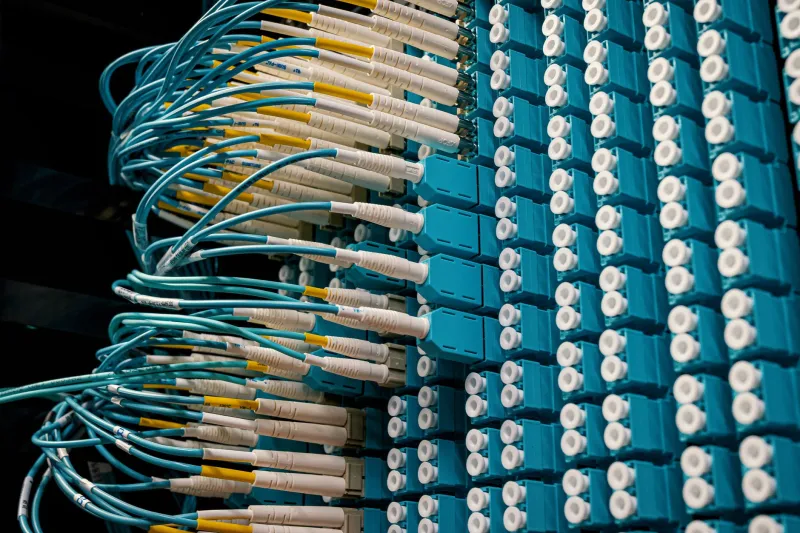
In a mature enterprise environment, this proliferation produces what integration architects sometimes call a "spaghetti topology" — a web of bilateral connections in which every system is directly dependent on multiple other systems, change propagates unpredictably, and the failure of any single component can cascade across the entire network in ways that are difficult to anticipate and even harder to diagnose.
Layered on top of this topology are the custom middleware solutions that were built to bridge incompatible systems — often by contractors who are no longer available, using documentation that was never completed, against requirements that have since changed. These middleware layers are among the most expensive artifacts in the enterprise technology portfolio: they are too critical to remove, too poorly understood to modify safely, and too idiosyncratic to hand off to new personnel without significant institutional knowledge transfer.
Undocumented data flows complete the picture. In many enterprises, there are data pipelines that move sensitive or operationally critical information between systems through pathways that no current staff member can fully trace. These flows were built to meet a business requirement; the people who built them moved on; and the flows continued operating — until they didn't.
Why Integration Debt Compounds Faster Than Code-Level Debt
Traditional technical debt is contained within system boundaries. Refactoring a poorly written module affects the module and its immediate dependencies. The blast radius is knowable and, with sufficient testing, manageable.
Integration debt operates differently. Because it lives in the connections between systems, its effects are cross-cutting by definition. A change to one system's data schema can break integrations with five other systems simultaneously. A middleware component that fails under load can halt data flows across an entire business domain. An undocumented dependency discovered during a migration project can extend the timeline by months.
This cross-cutting nature means that integration debt does not simply accumulate — it multiplies. Each new system added to an environment with existing integration debt inherits exposure to all of the fragility embedded in that environment. Each new integration built on top of an existing brittle foundation adds another layer of dependency. The compounding effect is geometric rather than linear, and the inflection point — where the cost of managing the integration environment exceeds the cost of rebuilding it — arrives faster than most organizations anticipate.
The financial consequences are substantial. Integration failures are among the most expensive outages an enterprise can experience, precisely because they tend to affect multiple systems and business processes simultaneously. The labor cost of maintaining undocumented, custom integration code is consistently underestimated in IT operating budgets. And the opportunity cost of delayed modernization initiatives — held back because the integration environment cannot safely absorb the change — is rarely captured in any formal accounting.
Assessing the Depth of Your Integration Liability
Before remediation is possible, the scope of the problem must be understood. Most enterprises lack a complete, current map of their integration landscape — which is itself a symptom of the underlying governance deficit.
A structured integration debt assessment should address several key areas:
Topology mapping. Document every system-to-system connection in the environment, including the protocol, data formats, frequency, and business process it supports. This exercise frequently surfaces connections that no one in the current IT organization was aware of — a finding that is simultaneously alarming and clarifying.
Dependency analysis. For each integration, identify the downstream systems and processes that would be affected by a failure. This produces a criticality ranking that should inform both remediation prioritization and business continuity planning.
Documentation audit. Assess the quality and completeness of documentation for each integration. Connections for which no current documentation exists — or for which documentation has not been updated within the past 18 months — should be flagged as high-risk assets requiring immediate attention.
Ownership verification. Identify who is currently responsible for each integration from a technical and business perspective. Integrations with no clear owner are integrations that will be discovered only when they fail.
Change frequency analysis. Examine how often each connected system undergoes changes and how those changes are communicated to integration owners. High-change systems with poorly managed integration dependencies are primary candidates for architectural intervention.
Remediation Strategies That Scale
The goal of integration debt remediation is not to rebuild every connection simultaneously — that approach is neither feasible nor advisable. The objective is to introduce architectural patterns that prevent the accumulation of new debt while systematically addressing the highest-risk existing liabilities.
The most effective structural intervention is the adoption of an integration platform or API management layer that serves as a mediated hub for system connections. Rather than allowing point-to-point connections to proliferate, all integrations are routed through a governed, documented, and monitored platform. This does not eliminate existing connections overnight, but it establishes the architectural discipline that prevents the problem from continuing to grow.
For existing high-risk integrations, a triage approach is appropriate: connections that are both critical and undocumented should be prioritized for immediate documentation and, where feasible, replacement with platform-managed equivalents. Connections that are low-criticality and high-maintenance are candidates for decommissioning — a category that is larger than most organizations expect.
Governance is as important as architecture. Integration debt is fundamentally a governance failure: connections were built without standards, documented without rigor, and maintained without ownership. Remediation that addresses the technical symptoms without establishing governance processes will simply recreate the problem over a longer timeline.
The Cost of Inaction
Organizations that defer integration debt remediation do not avoid cost — they defer and amplify it. Every modernization initiative, every cloud migration, every data platform investment is constrained by the integration environment it must operate within. The brittle, opaque, undocumented connections that characterize high-integration-debt environments are not background noise; they are active impediments to enterprise agility.
The enterprises that will execute digital transformation most effectively over the next five years are not necessarily the ones with the most sophisticated applications — they are the ones with the most coherent, governable integration architectures. The connective tissue of the enterprise technology portfolio is not a secondary concern. It is, increasingly, the primary determinant of how quickly and safely an organization can change.
The integration debt conversation needs to be elevated to the same level of executive visibility that technical debt has achieved. The liability is real, it is compounding, and the organizations that address it deliberately will have a structural advantage over those that discover it through failure.